HIGHLIGHTS OF PRESCRIBING INFORMATION
These highlights do not include all the information needed to use
LYNKUET safely and effectively. See full prescribing information for
LYNKUET.
LYNKUET® (elinzanetant) capsules, for oral use
Initial U.S. Approval: 2025
LYNKUET is a neurokinin 1 (NK1) and neurokinin 3 (NK3) receptor
antagonist indicated for the treatment of moderate to severe vasomotor
symptoms due to menopause. (1)
The recommended dosage is 120 mg (two 60 mg capsules) orally once daily at
bedtime with or without food. (2.2)
Swallow capsules whole. Do not cut, crush, or chew capsules. (2.2)
See full prescribing information for LYNKUET dosage modification due to
drug interactions. (2.3)
Capsules: 60 mg (3)
- Pregnancy. (4)
- CNS Depressant Effect and Daytime Impairment: Advise patients about
the potential for somnolence and other nervous system effects. Advise
patients who experience these effects to refrain from driving or engaging
in hazardous occupations or activities until the effects have resolved
(5.1) - Hepatic Transaminase Elevations: Perform bloodwork prior to initiation
of LYNKUET to evaluate for hepatic function and injury. Do not start
therapy if serum transaminase concentration is equal to or exceeds two - times the upper limit of normal (ULN) or if the total bilirubin is equal to
or exceeds two times the ULN. Perform follow-up evaluations of hepatic
transaminase concentration 3 months after initiation. Advise patients to
discontinue LYNKUET immediately in case of signs or symptoms
suggesting liver injury. (5.2) - Risk of pregnancy loss: May cause pregnancy loss or stillbirth when
administered during pregnancy. Exclude pregnancy in females of
reproductive potential prior to initiating LYNKUET. Discontinue if
pregnancy is confirmed (5.3) - Risk of seizure (5.4)
The most frequently reported (≥5%) adverse reactions were headache, fatigue,
dizziness and somnolence. (6.1)
To report SUSPECTED ADVERSE REACTIONS, contact Bayer
HealthCare Pharmaceuticals Inc. at 1-888-842-2937 or FDA at 1-800-
FDA-1088 or www.fda.gov/medwatch.
- Strong CYP3A4 Inhibitors and grapefruit (juice): Avoid concomitant
use with LYNKUET. (7.1) - Moderate CYP3A4 Inhibitors: Reduce LYNKUET dosage to 60 mg
once daily. (2.3, 7.1) - Strong and Moderate CYP3A4 Inducers: Avoid concomitant use with
LYNKUET. (7.1)
- End Stage Renal Disease with or without hemodialysis: Not
recommended. (8.6) - Moderate to Severe Hepatic Impairment: Not recommended. (8.7)
See 17 for PATIENT COUNSELING INFORMATION and FDA-
approved patient labeling.
Revised: 08/2026
FULL PRESCRIBING INFORMATION: CONTENTS*
2.1 Recommended Evaluation and Testing Before Initiation of LYNKUET
2.3 Dosage Modifications for Drug Interactions
5.1 Central Nervous System (CNS) Depressant Effect and Daytime
Impairment
5.2 Hepatic Transaminase Elevations
6.1 Clinical Trials Experience
7.1 Effects of Other Drugs on LYNKUET
7.2 Effects of LYNKUET on Other Drugs
8.3 Females and Males of Reproductive Potential
13.1 Carcinogenesis, Mutagenesis, Impairment of Fertility
13.2 Animal Toxicology and/or Pharmacology
14.1 Effects on Vasomotor Symptoms (VMS) in Postmenopausal Women
14.2 Effects on Endometrium in Postmenopausal Women
*Sections or subsections omitted from the full prescribing information are not listed.
FULL PRESCRIBING INFORMATION
1 INDICATIONS AND USAGE
LYNKUET is indicated for the treatment of moderate to severe vasomotor symptoms (VMS) due to menopause.
2 DOSAGE AND ADMINISTRATION
2.1 Recommended Evaluation and Testing Before Initiation of LYNKUET
- Exclude pregnancy in females of reproductive potential [see Contraindications (4)], Warnings and
Precautions (5.3), and Use in Specific Populations (8.3)]. - Perform baseline hepatic laboratory tests to evaluate for hepatic function and injury [including serum alanine
aminotransferase (ALT), serum aspartate aminotransferase (AST), serum alkaline phosphatase (ALP), and
serum bilirubin (total and direct)] before initiating treatment with LYNKUET. Do not start LYNKUET if
ALT or AST is ≥ 2 times upper limit of normal (ULN) or if the total bilirubin is ≥ 2 times ULN [see
Warnings and Precautions (5.2) and Use in Specific Populations (8.7)].
2.2 Recommended Dosage
The recommended dosage of LYNKUET is 120 mg (two 60 mg capsules) orally once daily at bedtime at about the same
time each day. If a dose is missed at bedtime, take the next dose as scheduled on the following day. Do not take two doses
on the same day to make up for a missed dose.
Take LYNKUET with or without food. Take LYNKUET with water and swallow capsules whole. Do not cut, crush or
chew capsules.
2.3 Dosage Modifications for Drug Interactions
Dosage modifications for concomitant use with specific drugs are provided in Table 1 [see Drug Interactions (7.1)].
Table 1: Dosage Modifications for Drug Interactions
| Concomitant Drug | LYNKUET Dosage |
|---|---|
| Strong CYP3A4 inhibitors and grapefruit (juice) | Avoid concomitant use |
| Moderate CYP3A4 inhibitors | 60 mg (one capsule) orally once daily at bedtime [see After discontinuation of the moderate CYP3A4 inhibitor |
| Strong and Moderate CYP3A4 inducers | Avoid concomitant use |
3 DOSAGE FORMS AND STRENGTHS
Capsules: 60 mg, opaque red, oblong, soft, gelatin capsules, with white printing of “EZN60”.
4 CONTRAINDICATIONS
LYNKUET is contraindicated in pregnancy. Exposure to LYNKUET may cause pregnancy loss or stillbirth when
administered during pregnancy [see Use in Specific Populations (8.1, 8.3)].
5 WARNINGS AND PRECAUTIONS
5.1 Central Nervous System (CNS) Depressant Effect and Daytime Impairment
In the three OASIS trials, nervous system effects (including somnolence, fatigue, vertigo, dizziness and presyncope)
occurred in 11.9% of patients on LYNKUET compared to 3.5% on placebo. [see also Adverse Reactions (6.1)].
Advise patients about the potential for somnolence and other nervous system effects. Advise patients who experience
these effects to refrain from driving or engaging in hazardous occupations or activities until the effects have resolved [see
Clinical Studies (14.3)].
5.2 Hepatic Transaminase Elevations
Elevations in serum transaminase (ALT and/or AST) concentrations equal to or greater than three times the ULN occurred
in 0.6% of patients receiving LYNKUET and 0.4% of patients receiving placebo up to 12 weeks in three clinical trials.
Perform baseline bloodwork (including ALT, AST, alkaline phosphatase, and total and direct bilirubin) prior to initiation
of LYNKUET to evaluate for hepatic function and injury. Do not start therapy if serum transaminase concentration is
equal to or exceeds two times the ULN or if the total bilirubin is equal to or exceeds two times the ULN. Perform follow-
up evaluations of hepatic transaminase concentration 3 months after initiation of therapy.
Advise patients to discontinue LYNKUET immediately and seek medical attention including hepatic laboratory tests if
they experience signs or symptoms that may suggest liver injury (new onset fatigue, decreased appetite, nausea, vomiting,
pruritus, jaundice, pale feces, dark urine, or abdominal pain).
Discontinue LYNKUET if transaminase elevations exceed five times the ULN or if transaminase elevations exceed three
times the ULN and total bilirubin exceeds two times the ULN.
Exclude alternative causes of hepatic laboratory test elevations.
5.3 Risk of Pregnancy Loss
LYNKUET is contraindicated for use in pregnancy [see Contraindications (4)]. Findings from animal studies suggest that
LYNKUET can cause pregnancy loss or stillbirth. Exclude pregnancy in females of reproductive potential prior to
initiating LYNKUET. Advise females of reproductive potential to use effective contraception during treatment with
LYNKUET and for 2 weeks after stopping LYNKUET [see Use in Specific Populations (8.1, 8.3)].
6 ADVERSE REACTIONS
The following clinically significant adverse reactions are described elsewhere in the labeling:
- Central Nervous System (CNS) Depressant Effect and Daytime Impairment [see Warnings and Precautions (5.1)]
- Hepatic Transaminase Elevations [see Warnings and Precautions (5.2)]
- Risk of Seizure [see Warnings and Precautions (5.4)]
6.1 Clinical Trials Experience
Because clinical trials are conducted under widely varying conditions, adverse reaction rates observed in the clinical trials
of a drug cannot be directly compared to rates in the clinical trials of another drug and may not reflect the rates observed
in clinical practice.
The safety of LYNKUET was evaluated in three randomized, double-blind, placebo-controlled, multicenter clinical trials
(OASIS 1, OASIS 2, OASIS 3) in 1420 women. In OASIS 1 and OASIS 2 combined, 793 women received LYNKUET or
placebo for 12 weeks. After the first 12 weeks, 341 women randomized to LYNKUET continued to receive LYNKUET
for another 14 weeks, with a total treatment duration of up to 26 weeks. In OASIS 1 and OASIS 2 combined, 349 women
received placebo for the first 12 weeks and 348 women switched to LYNKUET for the next 14 weeks. In OASIS 3, 627
women received LYNKUET or placebo for up to 52 weeks to evaluate long-term safety [see Clinical Studies (14)].
Common Adverse Reactions
In OASIS 1 and 2 combined, through the first 12 weeks, commonly reported adverse reactions in the LYNKUET group
(≥2% and greater than in placebo) were headache, fatigue, gastroesophageal reflux disease, dizziness, nausea, and
somnolence.
Similar adverse reactions were seen in OASIS 3. Table 2 shows adverse reactions reported in at least 2% of women and
more commonly in women taking LYNKUET than placebo in OASIS 3.
Table 2: Common Adverse Reactions Reported in ≥ 2% in LYNKUET and Greater than Placebo, Weeks 1-52
(OASIS 3)
| Adverse Reaction | LYNKUET N=313 n (%) | Placebo N=314 n (%) |
|---|---|---|
| Headache | 30 (9.6) | 22 (7.0) |
| Fatigue* | 23 (7.3) | 9 (2.9) |
| Dizziness† | 19 (6.1) | 6 (1.9) |
| Somnolence‡ | 16 (5.1) | 4 (1.3) |
| Abdominal pain§ | 14 (4.5) | 8 (2.5) |
| Rash¶ | 13 (4.2) | 5 (1.6) |
| Diarrhea | 12 (3.8) | 3 (1.0) |
| Muscle spasms# | 10 (3.2) | 2 (0.6) |
*Includes asthenia.
†Includes balance disorder, presyncope, vertigo, vertigo CNS origin, vertigo positional, and vestibular neuronitis.
‡Includes lethargy.
§Includes abdominal discomfort, abdominal pain lower/upper.
¶Includes dermatitis, urticaria.
#Includes muscle tightness.
Other clinically important adverse reactions:
Seizure was reported in one patient (<0.1%) with a history of seizures in the clinical trials of LYNKUET.
Adverse Reactions Leading to Discontinuation
In OASIS 3, adverse reactions leading to treatment discontinuation (≥1% in LYNKUET and greater than placebo) were
abdominal pain (1.6%), fatigue (1.6%), depression (1.6%) and headache (1.3%).
Photosensitivity
In the OASIS trials, mild to moderate events of photosensitivity occurred in 0.5% of patients receiving LYNKUET and
0.1% of patients receiving placebo. Onset of photosensitivity reactions ranged from day 1 to day 290. While
discontinuation occurred in one patient, photosensitivity events in other patients resolved under continued treatment with
LYNKUET [see Nonclinical Toxicology (13.2)].
6.2 Postmarketing Experience
The following adverse reactions have been identified during post-approval use of LYNKUET. Because these reactions are
reported voluntarily from a population of uncertain size, it is not always possible to reliably estimate their frequency or
establish a causal relationship to drug exposure.
Postmarketing cases of seizure have been reported in patients treated with LYNKUET.
7 DRUG INTERACTIONS
7.1 Effects of Other Drugs on LYNKUET
Elinzanetant is primarily metabolized via CYP3A4 enzyme. Table 3 describes drug interactions where concomitant use of
another drug affects LYNKUET.
Table 3: Drug Interactions: Concomitant Use of Other Drugs Affect the Use of LYNKUET
| Strong and Moderate CYP3A4 Inhibitors1 | |
|---|---|
| Prevention or Management | Strong CYP3A4 Inhibitors and grapefruit (juice): Avoid concomitant use. |
| Moderate CYP3A4 Inhibitors: Reduce the LYNKUET dosage [see Dosage and Administration (2.2)]. | |
| Clinical Effect(s) | Strong and moderate CYP3A4 inhibitors increase elinzanetant exposure, which may increase the risk of LYNKUET-associated adverse reactions [see Clinical Pharmacology (12.3)]. |
| Strong and Moderate CYP3A4 Inducers1 | |
| Prevention or Management | Strong and moderate CYP3A4 inducers: Avoid concomitant use. |
| Clinical Effect(s) | Strong and moderate CYP3A4 inducers decrease elinzanetant exposure, which may reduce the effectiveness of LYNKUET. |
1See www.fda.gov/CYPandTransporterInteractingDrugs for examples of strong and moderate CYP3A4 inhibitors, and CYP3A4
inducers.
7.2 Effects of LYNKUET on Other Drugs
CYP3A4 Substrates
Avoid concomitant use unless otherwise recommended in the Prescribing Information for CYP3A4 substrates where
minimal concentration changes may lead to serious adverse reactions. See
www.fda.gov/CYPandTransporterInteractingDrugs for examples of CYP3A4 substrates.
Elinzanetant is a weak inhibitor of CYP3A4. Concomitant use of LYNKUET increases exposure of CYP3A4 substrates
[see Clinical Pharmacology (12.3)], which may increase the risk of adverse reactions related to these substrates.
8 USE IN SPECIFIC POPULATIONS
8.1 Pregnancy
Risk Summary
LYNKUET is contraindicated in pregnancy [see Contraindications (4)]. If pregnancy occurs during the use of
LYNKUET, discontinue treatment. Based on findings from animal reproduction studies, LYNKUET may cause
pregnancy loss or stillbirth but not fetal malformations when administered during pregnancy. There are no data on the use
of LYNKUET in pregnant women to evaluate for a drug-associated risk of major birth defects, miscarriage, or adverse
maternal or fetal outcomes.
In animal reproduction studies in rats, an increase in total litter loss or stillbirth and a decrease of neonatal pup viability
was observed within the range of human therapeutic exposure when dams were treated orally throughout gestation and
lactation [i.e., gestation day 6 to lactation day 21]. There was an increase in percentage of pre- and post-implantation
embryo loss and decrease in fetal body weights at 16-fold the human therapeutic exposure when rat dams were treated
orally prior to mating and through the early embryonic period [i.e., 22 days before mating to post-coitum day 6]. In
rabbits, there was marked body weight loss and decreased food consumption in dams treated orally during gestation day 7
to 19 at doses equivalent to human therapeutic exposure (see Data).
Data
Animal Data
In a fertility and early embryonic development study in female rats, once daily oral doses of elinzanetant were
administered 22 days before mating through post-coitum day 6. Increased percentage of pre-implantation and post-
implantation embryo loss, resulting in reduced litter size, and lower fetal body weights were seen at the dose of 100
mg/kg/day (14-fold the AUC(0-24) at the human therapeutic dose). These effects were not observed following dosing at 25
mg/kg/day (3-fold the AUC(0-24) at the human therapeutic dose).
In an embryo-fetal development study in pregnant rats, once daily oral doses of elinzanetant were administered throughout
organogenesis from gestation day 6 to 17. No evidence of embryo-fetal lethality or teratogenicity occurred at doses ≤100
mg/kg/day (23-fold the AUC(0-24) at the human therapeutic dose) and no maternal toxicity occurred at doses ≤25
mg/kg/day (7-fold the AUC(0-24) at the human therapeutic dose).
In an embryo-fetal development study in pregnant rabbits, twice daily oral doses of elinzanetant were administered
throughout organogenesis from gestation day 7 to 19. Maternal toxicity in the form of marked body weight loss and
decreased food consumption leading to early sacrifice in 4 out of 27 females was observed at the highest tested dose of
140 mg/kg/day (equivalent to the AUC(0-24) at the human therapeutic dose). No evidence of embryo-fetal lethality or
teratogenicity occurred in fetuses of surviving dams at doses ≤140 mg/kg/day (equivalent to the AUC(0-24) at the human
therapeutic dose).
In a pre- and post-natal development study in rats, once daily oral doses of elinzanetant were administered from gestation
day 6 to lactation day 21. A higher incidence of still born pups, an increase in total litter loss, a decrease in pup viability
between postnatal days 0 and 4, and an increase in the number of neonatal pups without milk in the stomach were
observed at a dose of ≥5 mg/kg/day (equivalent to the AUC(0-24) at the human therapeutic dose).
8.2 Lactation
Risk Summary
There are no data on the presence of elinzanetant or its metabolites in human milk, the effects on the breastfed child, or
the effects on milk production. Elinzanetant is present in animal milk. When a drug is present in animal milk, it is likely
that the drug will be present in human milk (see Data).
Data
Animal Data
Following administration of radiolabeled elinzanetant to lactating rats, approximately 6% of the elinzanetant dose was
excreted in the milk.
Principle human metabolites of elinzanetant were also detected in the plasma of pups from rat dams that were dosed once
daily orally during pregnancy and lactation at ≥1.5 mg/kg/day (elinzanetant AUC(0-24) below the range of human
therapeutic exposure).
8.3 Females and Males of Reproductive Potential
Based on findings from animal reproduction studies, LYNKUET may cause pregnancy loss or stillbirth when
administered during pregnancy. Fetal malformations were not observed in those studies [see Use in Specific Populations
(8.1)].
Pregnancy Testing
Exclude pregnancy before initiating treatment with LYNKUET. Perform pregnancy testing if pregnancy is suspected
during treatment with LYNKUET, and discontinue treatment if pregnancy is confirmed [see Contraindications (4) and
Warnings and Precautions (5.3)].
Contraception
Females
Pregnancy should be prevented in women of reproductive potential by using effective contraception during and for 2
weeks after stopping treatment because LYNKUET can cause pregnancy loss or stillbirth [see Use in Specific Populations
(8.1)].
8.4 Pediatric Use
The efficacy and safety of LYNKUET in pediatric patients have not been established, and LYNKUET is not indicated in
this population.
8.5 Geriatric Use
There have not been sufficient numbers of geriatric women involved in clinical trials utilizing LYNKUET to determine
whether those over 65 years of age differ from younger women in their response to LYNKUET.
8.6 Renal Impairment
No dose adjustment is required for patients with mild to severe [estimated glomerular filtration rate (eGFR) 15 to < 90
mL/min] renal impairment. The effect of end-stage renal disease (eGFR <15 mL/min) (with or without hemodialysis) on
the pharmacokinetics of LYNKUET has not been studied [see Clinical Pharmacology (12.3)].
8.7 Hepatic Impairment
No dose adjustment is required in patients with mild (Child-Pugh A) hepatic impairment. Moderate (Child-Pugh B)
hepatic impairment increased the exposure of LYNKUET. LYNKUET has not been studied in individuals with severe
(Child-Pugh C) hepatic impairment. LYNKUET is not recommended in patients with moderate or severe hepatic
impairment [see Clinical Pharmacology (12.3)].
10 OVERDOSAGE
There is no specific antidote for LYNKUET. In the case of overdose, the individual should be closely monitored, and
supportive treatment should be considered based on signs and symptoms.
11 DESCRIPTION
LYNKUET is an NK1 and NK3 receptor antagonist.
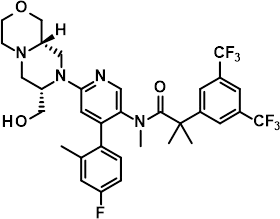
The chemical name of elinzanetant is 2-[3,5-bis(trifluoromethyl)phenyl]-N-{4-(4-fluoro-2-methylphenyl)-6-[(7S,9aS)-7-
(hydroxymethyl)hexahydropyrazino[2,1-c][1,4]oxazin-8(1H)-yl]pyridin-3-yl}-N,2-dimethylpropanamide having a
molecular formula of C33H35F7N4O3 and a molecular weight of 668.7.
The structural formula of elinzanetant is:
Elinzanetant is a white to yellowish powder and is practically insoluble in water and slightly soluble under acidic
conditions.
Each LYNKUET (elinzanetant) capsule for oral use contains 60 mg of elinzanetant and the following inactive ingredients:
all-rac-α-Tocopherol, caprylocaproyl macrogolglycerides, glycerol monocaprylocaprate, glycerol mono-oleate, and
polysorbate 80. The capsule is composed of edible ink, ferric oxide red, ferric oxide yellow, gelatin, sorbitol special-
glycerin, and titanium dioxide.
12 CLINICAL PHARMACOLOGY
12.1 Mechanism of Action
LYNKUET is a neurokinin 1 (NK1) and neurokinin 3 (NK3) receptor antagonist. Inhibition of Substance P and
Neurokinin B through antagonism of NK1 and NK3 receptor signaling on kisspeptin/neurokinin B/dynorphin (KNDy)
neurons can modulate neuronal activity in thermoregulation associated with hot flashes.
Elinzanetant has higher affinity for human NK1 receptors (pKi values of 8.7 to 10.2) and NK3 receptors (pKi values of
8.0 to 8.8) than for human NK2 receptors (pKi values of approximately 6.0).
12.2 Pharmacodynamics
Cardiac Electrophysiology
No clinically relevant prolongation of the QTc interval was observed after single oral administration of elinzanetant at
doses up to 5 times the maximum recommended dose. However, QTc prolongation effect of elinzanetant when co-
administered with strong CYP3A4 inhibitors has not been sufficiently characterized.
12.3 Pharmacokinetics
Elinzanetant Cmax and AUC increased in a greater than dose-proportional manner (20% to 50%) over the dose range from
40 to 160 mg once daily (0.33 to 1.33 times the highest recommended dose).
Elinzanetant steady state plasma concentrations were reached in 5 to 14 days after daily dosing.
Elinzanetant accumulation is <2-fold at the approved recommended dosage.
Absorption
Elinzanetant median (min-max) time to maximum plasma concentration (Tmax) is 1.0 hours (1-2.5 hours) at steady state.
Elinzanetant absolute bioavailability is 52% following oral administration.
Effect of Food
No clinically significant differences in elinzanetant pharmacokinetics were observed following administration with a high-
calorie, high-fat meal containing approximately 1000 calories (500-600 calories from fat, 250 calories from
carbohydrates, and 150 calories from protein).
Distribution
The mean volume of distribution after intravenous administration at steady state of elinzanetant is 137 L. The plasma
protein binding of elinzanetant is 99.7%. The blood-to-plasma ratio is between 0.6 and 0.7.
Elimination
Elinzanetant elimination half-life was approximately 45 hours in women with vasomotor symptoms. The clearance of
elinzanetant after a single intravenous dose was 8.77 L/h.
Metabolism
Elinzanetant is primarily metabolized by CYP3A4 to yield three major active metabolites, M18/21, M27, and M30/34.
These metabolites have similar potency for the human NK1 and NK3 receptors as compared to elinzanetant. The ratio of
these metabolites to parent in plasma is approximately 0.39.
Excretion
Following a single oral dose of radiolabeled elinzanetant in healthy subjects, approximately 90% of the dose was
recovered in feces (50% unchanged) and less than 1% with urine.
Specific Populations
No clinically significant differences in the pharmacokinetics of LYNKUET were observed based on race.
Patients with Renal Impairment
In patients with mild (eGFR 60 to <90 mL/min) renal impairment, mean elinzanetant Cmax increased 1.9-fold and AUC
increased 1.6-fold. In patients with moderate (eGFR 30 to <60 mL/min) renal impairment, mean elinzanetant Cmax
increased 1.8-fold and AUC increased 1.7-fold. In patients with severe (eGFR< 30 mL/min) renal impairment, mean
elinzanetant Cmax increased 1.2-fold and AUC increased 1.1-fold.
Population pharmacokinetic analysis of the clinical trial data indicate similar exposure of elinzanetant in patients with
mild and moderate renal impairment compared to patients with normal renal function.
Elinzanetant has not been studied in patients with end-stage renal disease (eGFR <15 mL/min) [see Use in Specific
Populations (8.7)].
Patients with Hepatic Impairment
In patients with Child-Pugh Class A (mild) hepatic impairment, mean elinzanetant Cmax increased 1.2-fold and AUC(0-24)
increased 1.5-fold. In patients with Child-Pugh Class B (moderate) hepatic impairment, mean elinzanetant Cmax and
AUC(0-24) increased by 2.3-fold.
Elinzanetant has not been studied in patients with Child-Pugh Class C (severe) hepatic impairment [see Use in Specific
Populations (8.6)].
Drug Interaction Studies
Clinical Studies and Model-Informed Approaches
No clinically significant differences in elinzanetant pharmacokinetics were observed when used concomitantly with
esomeprazole (proton pump inhibitor). No clinically significant differences in the pharmacokinetics of the following oral
drugs were observed when used concomitantly with elinzanetant: tamoxifen (substrate of CYP2D6, CYP3A4 and P-gp)
and rosuvastatin (substrate of BCRP, OATP1B1/OATP1B3, and OAT3).
Strong CYP3A4 and P-gp inhibitors: Elinzanetant Cmax increased approximately 3.3-fold and AUC increased 6.3-fold
following concomitant use with itraconazole 200 mg (strong CYP3A4 and P-gp inhibitor).
Moderate CYP3A4 Inhibitors: Elinzanetant Cmax and AUC are predicted to increase 2.0-fold and 3.0-fold, respectively,
following concomitant use of elinzanetant 120 mg with erythromycin (moderate CYP3A4 inhibitor). PBPK predictions
after co-administration of 60 mg elinzanetant [(see Dosage and Administration (2.3)] with the moderate CYP3A4
inhibitor erythromycin showed a 1.4-fold increase of elinzanetant AUC and no increase for Cmax when compared to 120
mg, the regular recommended elinzanetant dosage.
Weak CYP3A4 Inhibitors: Elinzanetant Cmax is predicted to increase 1.3-fold and AUC increase 1.5-fold following
concomitant use with cimetidine (weak CYP3A4 inhibitor).
Moderate to Strong CYP3A4 Inducers: Elinzanetant Cmax reduced by 44% and AUC reduced by 64% following
concomitant use with carbamazepine (moderate to strong CYP3A4 inducer) 600 mg administered twice daily.
Sensitive CYP3A4 Substrates: Elinzanetant increased midazolam (sensitive CYP3A4 substrate) Cmax 1.5-fold and AUC
1.8-fold.
In Vitro Studies
Cytochrome P450 (CYP450) Enzymes: Elinzanetant and its metabolites M18/21, M27, and M30/M34 inhibited CYP3A4
but did not inhibit CYP1A1, 1A2, 2A6, 2B6, 2C8, 2C9, 2C19, 2D6, 2E1, or 2J2, or induce CYP1A2, 2B6, 2C19, or 3A4
at clinically relevant concentrations.
Transporter systems: Elinzanetant is a substrate for P-gp but not for OATP1A2, OATP2B1, BCRP, OATP1B1,
OATP1B3, or MRP4. Elinzanetant and its metabolites M18/21, M27, and M30/M34 inhibited P-gp, BCRP, and BSEP in
vitro but did not inhibit OAT1, OAT3, OCT1, OCT2, MATE2-K, or MRP2.
13 NONCLINICAL TOXICOLOGY
13.1 Carcinogenesis, Mutagenesis, Impairment of Fertility
Carcinogenesis
In a 2-year carcinogenicity study in female rats, oral doses of elinzanetant ≥60 mg/kg/day (29-fold the total AUC(0-24) at
the human therapeutic dose) increased the incidence of endometrial adenocarcinoma, the combination of malignant and
benign endometrial tumors and squamous cell carcinoma of the uterus, and lymphomas of the hematolymphoid system.
These effects were not observed at a dose representing 7-fold the total AUC(0-24) at the human therapeutic dose. The
clinical significance of these findings is unknown.
In a 26-week carcinogenicity study in rasH2 transgenic mice, there was no evidence of drug-related carcinogenicity at 85
or 70 mg/kg/day in males or females, respectively.
Mutagenesis
Elinzanetant showed no genotoxic potential in bacterial mutation assay (Ames test), mouse lymphoma assay, and in-vivo
bone marrow micronucleus test in rats. Additionally, the principal human metabolites of elinzanetant were negative for
genotoxicity in vitro in the Ames and micronucleus test.
13.2 Animal Toxicology and/or Pharmacology
Repeat dose toxicity studies were conducted in rats and cynomolgus monkeys. The findings of clinical relevance are
described below:
Reproductive organs (female)
In female rats, daily oral administration of elinzanetant for 4 weeks at 100 mg/kg (40-fold the AUC(0-24) at the human
therapeutic dose) induced mucification of the vaginal epithelium, uterine atrophy, and persistent corpora lutea. In
monkeys, twice daily oral administration of elinzanetant for 39 weeks at doses ≥60 mg/kg/day (2-fold the human
therapeutic exposure) reduced cyclical ovarian activity.
Central Nervous System (CNS)
In male and female rats, twice daily oral administration of elinzanetant for 13 weeks induced involuntary muscle
contractions starting around treatment day 24 and convulsions starting around day 34, when exposures in male and female
rats were estimated to be ≥4-fold the AUC(0-24) at the human therapeutic dose.
In female rats, twice daily oral administration of elinzanetant for 2 years induced convulsions starting around treatment
day 106, when exposures were estimated to be ≥17-fold the AUC(0-24) at the human therapeutic dose.
Skeletal muscle
In rats, twice daily oral administration of elinzanetant for 13 weeks at ≥100 mg/kg/day (equivalent to ≥16-fold the AUC(0-
24) at human therapeutic dose) induced skeletal muscle degeneration and necrosis. These findings were not related to the
convulsions presented by elinzanetant-treated rats in the same 13-week toxicity study (described under CNS above). A
longer duration (26-week) toxicity study in rats as well as a follow up mechanistic study in male rats did not have any
skeletal muscle findings. The clinical relevance of these findings is unknown.
Gastrointestinal system
In male and female monkeys, once daily oral administration of elinzanetant for 4 weeks at 60 mg/kg/day (4-fold the
AUC(0-24) at human therapeutic exposure) caused loose/watery fecal consistency and reduced food intake. In three studies
of male and female monkeys treated orally with elinzanetant for 13 to 39 weeks, gastrointestinal disturbances
characterized by diarrhea were observed at doses ≥30 mg/kg/day (0.2-fold the AUC(0-24) at human therapeutic exposure).
Diarrhea eventually led to dehydration, weight loss, and general ill-health in animals at doses of ≥60 mg/kg/day.
Photosensitivity
An in-vitro study demonstrated that elinzanetant has some potential for photosensitization. While studies of
photosensitivity in animals were not conducted, there is evidence that elinzanetant distributes to and accumulates in
melanin-containing tissues in the rats.
14 CLINICAL STUDIES
14.1 Effects on Vasomotor Symptoms (VMS) in Postmenopausal Women
The efficacy of LYNKUET for the treatment of moderate to severe vasomotor symptoms due to menopause was
demonstrated in the first 12 weeks of two randomized, double-blind, placebo-controlled, multicenter clinical trials. In
OASIS 1 (NCT05042362) and OASIS 2 (NCT05099159), 796 menopausal women were randomized 1:1 to receive
LYNKUET 120 mg or placebo once daily at bedtime for 12 weeks. In each of these two trials, after the first 12 weeks,
women on placebo were switched over to LYNKUET and all women were then treated with LYNKUET for a 14-week
extension for up to 26 weeks total exposure. Women who had at least 50 moderate to severe hot flashes (HFs), including
night-time HFs, per week, were enrolled in OASIS 1 and 2. In these trials, postmenopausal status was defined as at least
12 months of spontaneous amenorrhea, or at least 6 months of spontaneous amenorrhea with serum follicle stimulating
hormone levels >40 mIU/mL and a serum estradiol concentration of <30 pg/mL, or at least 6 months after hysterectomy
with serum follicle-stimulating hormone >40 mIU/mL and serum estradiol <30 pg/mL, or at least 6 weeks post-surgical
bilateral oophorectomy with or without hysterectomy.
In OASIS 1 and OASIS 2, the mean age of women was 54.6 years (range 40-65). The racial distribution was 80.4%
White, 17.1% Black or African American, and 0.5% Asian. About 8.5% women were of Hispanic or Latino ethnicity. The
study population included women with prior hysterectomy (38.8%), prior uni-/bilateral oophorectomy (20.6%), or prior
menopausal hormone therapy (MHT) use (31.4%).
The primary efficacy endpoints in both trials were the mean change in frequency and severity of moderate to severe
vasomotor symptoms from baseline to Weeks 4 and 12, including day and night HFs measured using the Hot Flash Daily
Diary (HFDD). In both trials, LYNKUET treatment groups showed statistically significant and clinically meaningful
reduction (≥ 2 hot flashes over 24 hours) in the frequency of moderate to severe HFs from baseline to Weeks 4 and 12
compared to placebo. In both trials, LYNKUET treatment groups showed a statistically significant reduction in severity of
moderate to severe vasomotor symptoms from baseline to Weeks 4 and 12 compared to placebo. Results of the co-primary
endpoints for change from baseline to Weeks 4 and 12 in mean frequency and severity of moderate to severe vasomotor
symptoms over 24 hours from OASIS 1 and OASIS 2 are shown in Tables 4 and 5.
Table 4: Mean Baseline and Mean Change in Frequency of Moderate to Severe VMS over 24 hours from Baseline
to Weeks 4 and 12 (OASIS 1 and 2)
| OASIS 1 | OASIS 2 | |||
|---|---|---|---|---|
| Parameter | LYNKUET 120 mg (N= 199) | Placebo (N= 197) | LYNKUET 120 mg (N= 200) | Placebo (N= 200) |
| Baseline Mean (SD) | 13.38 (6.57) | 14.26 (13.94) | 14.66 (11.08) | 16.16 (11.15) |
| Change from Baseline to Week 4 LS-Means (SE) Difference vs. Placebo (95% CI) P-value* | -7.60 (0.43) -3.29 (-4.47, -2.10) <0.0001 | -4.31 (0.43) | -8.58 (0.49) -3.04 (-4.40, -1.68) <0.0001 | -5.54 (0.49) |
| Change from Baseline to Week 12 LS-Means (SE) Difference vs. Placebo (95% CI) P-value* | -8.66 (0.58) -3.22 (-4.81, -1.63) <0.0001 | -5.44 (0.59) | -9.72 (0.50) -3.24 (-4.60, -1.88) <0.0001 | -6.48 (0.49) |
CI = Confidence Interval, LS-Means = Least Squares Means estimated from a mixed model for repeated measures analysis of covariance,
SD = standard deviation, SE = Standard Error
* - one-sided p-value.
Table 5: Mean Baseline and Mean Change in Severity of Moderate to Severe VMS over 24 hours from Baseline to
Weeks 4 and 12 (OASIS 1 and 2)
| Trial 1 | Trial 2 | |||
|---|---|---|---|---|
| Parameter | LYNKUET 120 mg (N= 199) | Placebo (N= 197) | LYNKUET 120 mg (N= 200) | Placebo (N= 200) |
| Baseline Mean (SD) | 2.56 (0.22) | 2.53 (0.23) | 2.53 (0.24) | 2.54 (0.24) |
| Change from Baseline to Week 4 LS-Means (SE) Difference vs. Placebo (95% CI) P-value* | -0.73 (0.04) -0.33 (-0.44, -0.23) <0.0001 | -0.40 (0.04) | -0.75 (0.04) -0.22 (-0.34, -0.09) 0.0003 | -0.53 (0.04) |
| Change from Baseline to Week 12 LS-Means (SE) Difference vs. Placebo (95% CI) P-value* | -0.92 (0.05) -0.40 (-0.54, -0.25) <0.0001 | -0.52 (0.05) | -0.91 (0.06) -0.29 (-0.44, -0.14) <0.0001 | -0.62 (0.05) |
CI = Confidence Interval, LS-Means = Least Squares Means estimated from a mixed model for repeated measures analysis of covariance, SD =
standard deviation, SE = Standard Error
* - one-sided p-value.
The results in reduction of frequency and severity of moderate to severe vasomotor symptoms were consistent across
various patient subgroups such as race, ethnicity, BMI and smoking status.
14.2 Effects on Endometrium in Postmenopausal Women
In all three OASIS trials, endometrial biopsies were performed to evaluate endometrial safety. A total of 477 patients who
received elinzanetant 120 mg underwent end-of-treatment endometrial biopsies. Among these, 140 received elinzanetant
for up to 52 weeks, 162 received elinzanetant for up to 26 weeks, and 175 received elinzanetant for up to 14 weeks. In
addition, 132 women in the placebo arm in OASIS 3 also had end-of-treatment endometrial biopsies.
No endometrial malignancies were identified. One case of endometrial hyperplasia with atypia was identified in OASIS 1
and two cases of endometrial hyperplasia without atypia were seen in OASIS 3. Also, one case of endometrial glandular
hyperplastic polyp was identified in OASIS 2. The rate of endometrial abnormalities was 0.8% (4 in 477) in patients who
received elinzanetant, in line with the expected background rate.
14.3 Special Safety Study
Ability to Operate Vehicles or Machinery
Driving performance was assessed at 9 hours after bedtime administration of LYNKUET 120 mg and 240 mg (two times
the recommended dose) in a randomized, double-blind, placebo-and active-controlled, four-period crossover study in 64
healthy women (mean age 52.1 years) using a computer-based driving simulation. The primary outcome measure was the
difference from placebo in the Standard Deviation of Lateral Position (SDLP). Driving performance was evaluated using a
validated threshold established in a population with blood alcohol concentration of 0.05%. Although the mean SDLP did
not reach the threshold for driving impairment after administration of LYNKUET 120 or 240 mg, compared to placebo,
driving ability was impaired in some subjects taking LYNKUET 120 or 240 mg after the initial dose. For a smaller
percentage of subjects driving ability was impaired after 5-days of consecutive dosing.
16 HOW SUPPLIED/STORAGE AND HANDLING
16.1 How Supplied
LYNKUET 60 mg capsules are supplied as opaque red, oblong, soft gelatin capsules, marked with white printing of
“EZN60.” LYNKUET capsules are available in the following package size:
- 60-count carton containing 5 blister cards (5 x 12 capsules) NDC 50419-475-05
16.2 Storage and Handling
Store at 20°C to 25°C (68°F to 77°F) with excursions permitted from 15°C to 30°C (59°F to 86°F) [see USP Controlled
Room Temperature].
For patients requiring a dosage modification (i.e., one 60 mg capsule once daily), instruct them to partially peel back the
foil covering the blister cell exposing only one of the two capsules. Store the remaining capsule in the original blister card
in the carton until the next dose.
17 PATIENT COUNSELING INFORMATION
Advise the patient to read the FDA-approved patient labeling (Patient Information).
CNS Depressant Effect and Daytime Impairment
Advise patients who experience somnolence and other nervous system effects to refrain from driving or engaging in
hazardous occupations or activities until the effects have resolved [see Warnings and precaution (5.1) and Clinical
Studies (14.3)].
Hepatic Transaminase Elevations
Advise patients that bloodwork to evaluate for hepatic functions and injury will be obtained at baseline and three months
after initiating therapy.
Advise patients to discontinue LYNKUET immediately and seek medical attention including hepatic laboratory tests if
they experience signs or symptoms that may suggest liver injury (new onset fatigue, decreased appetite, nausea, vomiting,
pruritus, jaundice, pale feces, dark urine, or abdominal pain). [see Warnings and Precautions (5.2)].
Females of Reproductive Potential
Exclude pregnancy in females of reproductive potential prior to initiating LYNKUET. Advise females of reproductive
potential to use effective contraception during treatment with LYNKUET and for two weeks after discontinuing treatment
and to discontinue LYNKUET if pregnancy is confirmed [see Warnings and Precautions (5.3) and Use in Specific
Populations (8.1, 8.3)].
Risk of Seizure
Advise patients about the potential risk of seizure. Advise patients to report any history of seizures or conditions that
potentially lower the seizure threshold. [see Warnings and Precautions (5.4)].
Important Administration Instructions
Advise patients to take LYNKUET once daily at bedtime with water and swallow capsules whole. Advise patients not to
cut, crush or chew capsules [see Dosage and Administration (2.1)].
Instruct patients requiring a dosage modification (i.e., one 60 mg capsule once daily) to partially peel back the foil
covering the blister cell to expose only one of the two capsules. Instruct patients to store the remaining capsule in the
original blister card in the carton until the next dose [see Storage and Handling (16.2)].
Drug Interactions
Advise patients to report their use of any other prescription or nonprescription medications or dietary supplements [see
Drug Interactions (7.1)].
Distributed by:
Bayer HealthCare Pharmaceuticals Inc.
Whippany, NJ 07981 USA
© 2026 Bayer HealthCare Pharmaceuticals Inc.
PATIENT INFORMATION
LYNKUET® (lin kew et')
(elinzanetant)
capsules, for oral use
What is LYNKUET?
LYNKUET is a prescription medicine used to reduce moderate to severe hot flashes (also known as vasomotor
symptoms) due to menopause. LYNKUET is not a hormone. Hot flashes are feelings of warmth in the face, neck, and
chest, or sudden intense feelings of heat and sweating.
Do not take LYNKUET if you:
- are pregnant.
Before you use LYNKUET, tell your healthcare provider about all of your medical conditions, including if you:
- have liver problems.
- have a history of seizures or have a condition that may increase your risk of having a seizure.
- are pregnant or planning to become pregnant. LYNKUET may harm your unborn baby. Women who can become
pregnant should talk to their healthcare provider to exclude pregnancy before starting treatment with LYNKUET and
use effective birth control during and for 2 weeks after stopping treatment.
Tell your healthcare provider about all the medicines you take, including prescription and over-the-counter
medicines, vitamins, and herbal supplements. LYNKUET may affect the way other medicines work, and other medicines
may affect how LYNKUET works. Keep a list of your medicines and show it to your healthcare provider and pharmacist
when you get a new medicine.
How should I take LYNKUET?
- Take LYNKUET exactly as your healthcare provider tells you to take it.
- Take 2 LYNKUET capsules by mouth, with or without food, about the same time each day at bedtime.
- Swallow the LYNKUET capsules whole with water. Do not cut, crush, or chew capsules.
- If you miss a dose of LYNKUET at bedtime, take the next dose as scheduled the following day. Do not take more
than 2 capsules on the same day to make up for a missed dose. - If you take certain medicines, your healthcare provider may reduce your dose to 1 LYNKUET capsule. If so, partially peel
back the foil of the blister card and leave the remaining capsule inside until your next dose.
What should I avoid while taking LYNKUET?
- Avoid eating grapefruit or drinking grapefruit juice during treatment with LYNKUET.
- LYNKUET may cause you to feel drowsy, if you experience this avoid driving and other hazardous activities until
these effects go away. See “What are the possible side effects of LYNKUET?”.
What are the possible side effects of LYNKUET?
LYNKUET can cause serious side effects, including:
- Central nervous system (CNS) effects and daytime impairment. LYNKUET can cause difficulty staying awake
(somnolence) and other nervous system effects including fatigue, having a spinning feeling (vertigo), dizziness, and
feeling faint (presyncope). If you experience these effects, you should not drive or do hazardous activities until these
effects go away. - Increased liver blood test values. LYNKUET may cause increased liver enzymes. Your healthcare provider will do
a blood test to check your liver before you start and 3 months after taking LYNKUET. Stop taking LYNKUET and tell
your healthcare provider right away if you have the following signs or symptoms that suggest liver problems:- feeling more tired than you do usually
- decreased appetite
- nausea
- vomiting
- itching
- yellowing of the eyes or skin (jaundice)
- pale feces
- dark urine
- pain in the stomach (abdomen)
- Risk of pregnancy loss. Taking LYNKUET while pregnant may cause loss of pregnancy or stillbirth. If you think
you are pregnant, stop taking LYNKUET and tell your healthcare provider right away. - Risk of seizure. Seek medical attention right away if you have loss of consciousness or seizure.
Common side effects of LYNKUET include:
- headache
- fatigue
- dizziness
- feeling drowsy or sleepy
- stomach (abdominal) pain
- rash
- diarrhea
- muscle spasms
Tell your healthcare provider if you have any side effects that bother you or do not go away. These
are not all the possible side effects of LYNKUET.
Call your doctor for medical advice about side effects. You may report side effects to FDA at 1-800-FDA-1088.
How should I store LYNKUET?
- Store LYNKUET at room temperature between 68°F to 77°F (20°C to 25°C).
- Keep LYNKUET and all medicines out of the reach of children.
General information about the safe and effective use of LYNKUET.
Medicines are sometimes prescribed for purposes other than those listed in a Patient Information leaflet. Do not use
LYNKUET for a condition for which it was not prescribed. Do not give LYNKUET to other people, even if they have
the same symptoms you have. It may harm them. You can ask your pharmacist or healthcare provider for information
about LYNKUET that is written for healthcare professionals.
What are the ingredients in LYNKUET?
Active ingredient: elinzanetant
Inactive ingredients: all-rac-α-Tocopherol, caprylocaproyl macrogolglycerides, glycerol monocaprylocaprate, glycerol
mono-oleate, and polysorbate 80. The capsule is composed of edible ink, ferric oxide red, ferric oxide yellow, gelatin,
sorbitol special-glycerin, and titanium dioxide.
Distributed by Bayer HealthCare Pharmaceuticals Inc., Whippany, NJ 07981 USA
For more information, go to www.lynkuet.com or call 1-888-842-2937.